Artificial Turf Guide: Benefits, Maintenance, and Eco-Friendly Installation Tips
Artificial Turf at a Glance: Outline and Key Decisions
Artificial turf promises a tidy, consistent surface without constant watering, mowing, or reseeding. To make it work for your space, start with a clear roadmap. This section lays out the outline you’ll follow through the rest of the article and highlights the pivotal choices that shape performance, cost, and environmental footprint. The goal is simple: understand what matters before you compare samples or schedule contractors, so every dollar and hour invested pulls its weight.
Here is the high-level outline this guide follows, with the decision points you’ll want to keep in mind:
– Materials and performance: fiber types, pile height, infill choices, safety, heat, and drainage
– Subbase and drainage: soil testing, base rock, grading, edging, and seam strategy
– Installation workflow: tools, steps, quality checks, and frequent pitfalls
– Care and costs: maintenance routines, lifespan, repairs, and payback math
– Greener choices and conclusion: recycled content, organic infills, end-of-life and practical takeaways
Before diving in, frame your priorities. Are you targeting a play area with impact attenuation, a water-wise front yard, or a multi-use field with frequent foot traffic? Each use case nudges specifications. For example, a backyard with pets benefits from antimicrobial infill and easy-to-rinse base layers, while a rooftop terrace needs lightweight panels, secure perimeter details, and attention to wind uplift.
Budget and climate deserve equal weight. Installed residential costs often land in a broad range depending on site prep, access, and product spec. Arid regions may favor turf for water conservation, but hot summers raise surface temperatures; that tension affects infill selection, color, and shade strategy. Freeze–thaw zones demand well-graded, compacted bases and permeable details to guard against heaving and puddles.
Finally, define success metrics upfront:
– Safety: impact values for play, traction when wet
– Hydrology: drainage rate through turf and base after heavy rain
– Durability: fiber resilience, stitch rate, UV stabilization
– Aesthetics: color blend, thatch realism, shine reduction
– Stewardship: microplastic control, recycled components, recyclability
With this outline and checklist, you’ll be able to read the following sections like a site plan: materials as your structure, base as the foundation, installation as the build, maintenance as the operating manual, and sustainability as the long-term covenant with your landscape.
Materials, Pile Design, and On‑Field Performance
Artificial turf is a system, not just a carpet. The face yarns are commonly polyethylene for softness and resilience, polypropylene for thatch or lower-wear zones, and sometimes nylon for added spring in specialty applications. Blade shapes (flat, C-shaped, S-shaped, and ribbed) influence how fibers reflect light, stand up under foot traffic, and resist matting. Pile height typically ranges from about 25–40 mm for residential lawns to 40–60 mm for sports, with higher piles feeling lush but requiring more infill and grooming to maintain fiber support.
Density and stitch rate matter as much as height. A denser product resists crushing and hides infill more effectively, which improves realism. Thatch yarns tucked beneath the taller fibers mimic the randomness of natural thatch, reducing shine and helping blades stand upright. Backing systems include primary layers for tuft lock and secondary coatings (often polyurethane or latex) with perforations to allow vertical drainage. Typical published drainage rates for modern products can exceed 20–40 inches per hour through the backing, though the real bottleneck is usually the base and subgrade.
Infill is the quiet workhorse. Options include washed silica sand for ballast and fiber support; elastomeric choices such as EPDM or TPE for added resilience; and organic blends like cork or coconut husk for cooler surfaces and lower microplastic risk. Shock pads under the turf add impact attenuation and can stabilize performance across seasons. For play areas, look for systems designed to meet head injury criteria appropriate to the fall height. Sports fields also track rotational resistance and ball roll; homeowners can borrow that thinking for a backyard putting strip or multi-use surface.
Heat and UV are critical. Dark infills can increase surface temperatures, while lighter or organic infills tend to run cooler. On cloudless summer days, unshaded synthetic surfaces may become too warm for bare feet; strategies include light-colored infill, periodic misting, portable shade, and blade shapes that shed heat more readily. UV stabilization in the yarn prevents fading and brittleness; coastal sites benefit from extra protection against salt-laden air and intense sun.
Compared with irrigated cool-season grass, turf reduces watering dramatically. In many dry regions, replacing about 1,000 square feet of thirsty lawn can save tens of thousands of gallons per year, depending on climate, soil, and usage patterns. The trade-offs: natural ecosystems supported by living turf are different from those of a synthetic surface, and you’ll need to manage infill migration and end-of-life planning. Knowing these dynamics helps you choose specifications aligned with your goals instead of chasing a one-size-fits-all label.
Subbase, Drainage, and the Installation Workflow
Great turf rides on a great base. Start by assessing soil type and drainage. Clay-heavy yards may benefit from deeper excavation and a thicker, more open-graded base, while sandy soils often need less intervention but still require compaction to prevent settlement. Establish a gentle slope—roughly 1–2% away from structures—to shed surface water, and plan for where stormwater goes after it leaves the turf. Gutters, downspouts, and adjacent hardscapes should be part of one hydrologic conversation.
Excavate organic material until you reach stable subgrade, commonly 3–4 inches for light residential use and 4–6 inches or more for play or sport. Install a geotextile separation layer if you’re worried about soil fines pumping up into the base. Place an open-graded crushed rock (for example, 3/8 inch minus or similar) in lifts, compacting each lift to a firm, uniform surface—many pros aim for around 90–95% relative compaction. The goal is a permeable, interlocked platform that drains vertically and laterally without rutting under foot traffic.
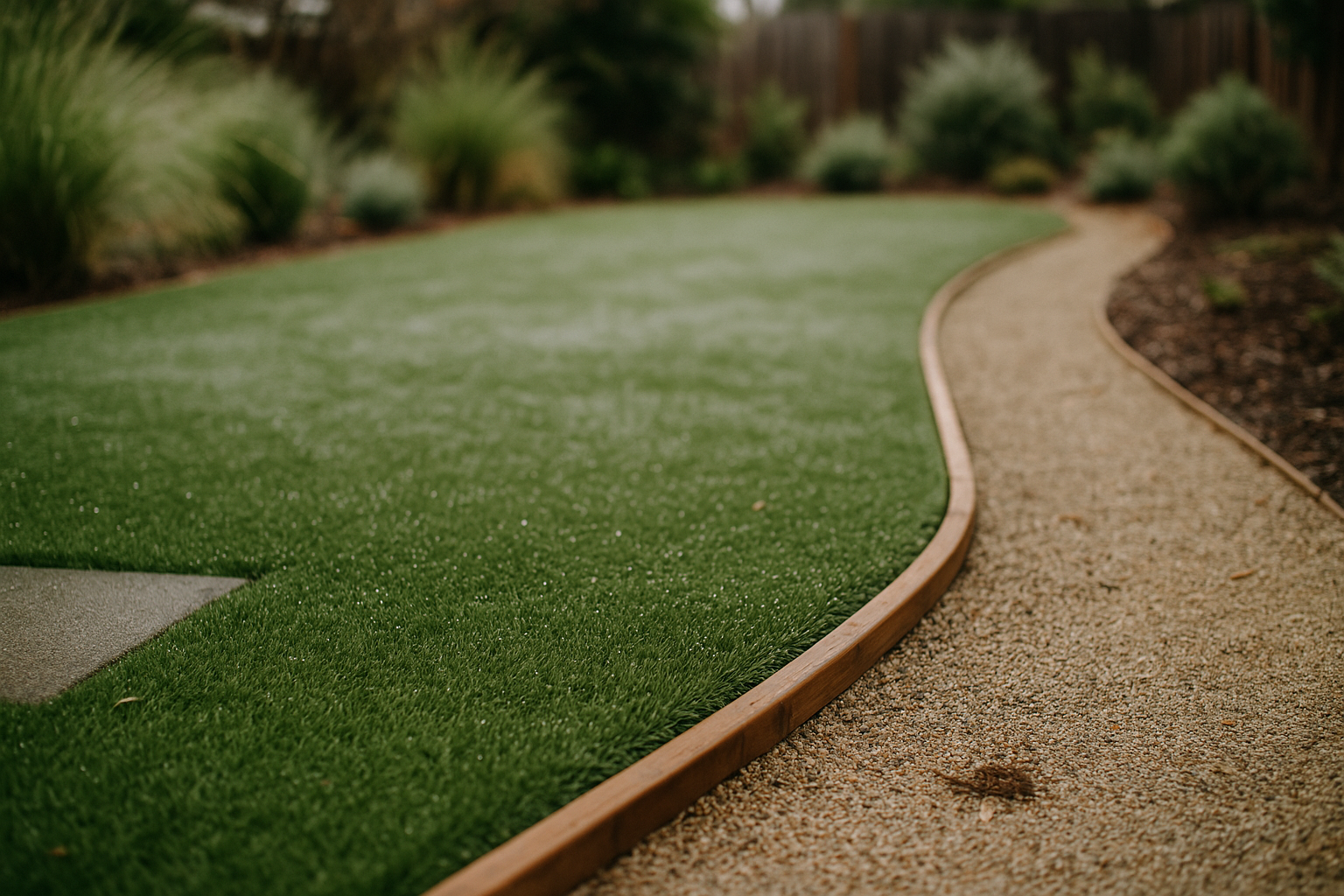
Edging defines the perimeter and anchors the system. Options include composite bender board, pressure-treated timber, or concrete curbing. Keep the top of the finished base slightly below edging to accept the turf and infill. Lay the turf off the roll so the grain faces your primary viewing angle; this reduces apparent sheen. Let it relax in the sun to release wrinkles before trimming. For seams, align tuft rows carefully, cut with sharp blades, and join using seam tape and adhesive or a seaming system recommended for your climate. Dry-fit first—seam errors are the most visible mistakes and the hardest to hide later.
Fastening methods vary by substrate: landscape nails or stakes around the perimeter for soil bases, or mechanical fixes on rooftops and decks. Space fasteners to prevent uplift but avoid overdriving, which can pucker the surface. After fixing, add infill in light passes and brush between lifts to settle material into the thatch and around blades. Power brooms can speed this step and lift pile for a more natural look. Final checks include tug testing seams, confirming drainage, and walking the surface to identify soft spots that reveal under-compaction.
Common pitfalls to dodge:
– Neglecting drainage paths near patios and planters
– Skipping soil separation in fine, saturated sites
– Rushing seams without aligning tuft rows
– Adding too much infill too fast, which causes ripples
– Overlooking expansion joints for rooftop or concrete installs
When the base is right, every other step gets easier. You’ll see stronger seams, flatter stretches, brisk drainage after storms, and a surface that stays smooth long after the ribbon is cut.
Care, Longevity, and Lifecycle Costs
Artificial turf doesn’t need mowing, but it isn’t “set and forget.” A light, regular routine preserves appearance and extends life. Debris removal is first: use a leaf blower on low, a plastic rake, or a stiff broom to keep organics from breaking down into fines that clog drainage. High-traffic lanes benefit from brushing to re-stand fibers and redistribute infill. For households with pets, quick rinse-downs and periodic enzymatic cleaners keep odors in check; subsurface drainage and permeable bases make this far easier.
Seasonal tasks pay dividends. In spring, inspect seams, edges, and infill depth; top up where the thatch starts to show. Summer heat may call for shade sails, lighter infill, or brief cooling with a hose during gatherings. Fall leaf drop requires steady cleanup to prevent matting. In snowy climates, avoid metal shovels; let snow melt naturally or use a plastic shovel with a light touch. Spot stains usually respond to mild soap and water; anything stronger, test in a small area first.
Lifespan depends on use intensity, UV exposure, and maintenance. Residential lawns often last 10–15 years, while high-use sports or play areas may land closer to 6–10 years before resurfacing. Repairs are feasible: isolated damage can be patched by cutting out a section and seaming in a donor piece from attic stock saved at installation. Keeping a small roll of matching turf and a bag of your chosen infill simplifies these fixes.
Costs vary with site complexity, access, and product specifications. Many residential projects fall into a broad installed range per square foot that reflects excavation depth, base rock, edge details, and turf type. To frame the economics, compare total ownership: irrigation, mowing, fertilizing, aeration, overseeding, and water rates versus turf’s upfront outlay plus cleaning, occasional infill, and eventual replacement. In water-scarce regions, annual savings from reduced irrigation and lawn services can bring payback within a mid-range window of years; shaded, temperate sites may prioritize consistency and accessibility over strict ROI.
A simple planning checklist streamlines upkeep:
– Monthly: blow/rake debris, brush traffic lanes
– Quarterly: inspect seams/edges, check infill levels, spot clean
– Annually: deep groom with power broom, evaluate drainage after a major storm
– As needed: pet odor treatment, weed control along edges, minor patch repairs
Approached as a light, regular routine rather than a once-a-year chore, maintenance turns into a 15–30 minute task that preserves the color, spring, and cleanliness that made you consider turf in the first place.
Greener Choices and Conclusion for Homeowners, Facility Managers, and Designers
Sustainability with artificial turf is about smarter materials and responsible detailing. Start with fiber and backing content: some products incorporate recycled polymers or design the backing for future separation and recycling. Organic or lighter-colored infills can trim surface temperatures and lower microplastic concerns, while shock pads extend resurfacing cycles by preserving impact performance across seasons. Specify perimeter containment—deeper edges, brush strips, and catch basins—to keep infill from migrating into planting beds or drains.
Hydrology and heat deserve design attention. Because modern backings drain rapidly, the true constraint is the base and subgrade. Choose open-graded aggregates, maintain a mild slope, and integrate French drains where soils hold water. To address heat, pair turf with shade trees, pergolas, or sail fabric, and mix in hardscape paths that break up large synthetic areas. Color matters: slightly lighter green blends and sandy infills reflect more sunlight than deep, uniform tones.
End-of-life planning is often overlooked. Ask suppliers about take-back programs, mechanical separation of face yarns and backing, and how padding and infill can be recovered. Designing seams and edges for easier future removal reduces landfill waste. On small residential projects, saving attic stock and labeling the turf specification makes repairs and eventual recycling simpler years down the line.
Environmental trade-offs deserve a frank summary:
– Pros: major water savings in arid zones, reduced fertilizer and pesticide use, predictable accessibility for mobility devices, year-round usability
– Cons: heat gain on hot days, end-of-life waste if recycling is unavailable, potential infill migration, fewer habitat benefits than living landscapes
Who benefits most? Homeowners seeking a tidy, low-water lawn; facility managers chasing consistent play and safer footing; designers solving for shade-challenged courtyards or rooftops. The sweet spot is thoughtful hybrid design: blend turf panels with native plantings, permeable paths, and rain gardens. That approach keeps water demand low, adds biodiversity, and cools the microclimate while delivering the durability and convenience that synthetic surfaces offer.
Conclusion: If you lead with clear priorities—safety targets, water goals, thermal comfort, and end-of-life strategy—you can specify artificial turf that is highly rated for performance and responsibility. Use the outline in this guide to structure decisions, insist on transparent data from suppliers, and match the system to your climate and use pattern. Done this way, your field, courtyard, or small urban lawn won’t just look good on day one; it will keep paying dividends in reliability, cleanliness, and water stewardship for years to come.


